
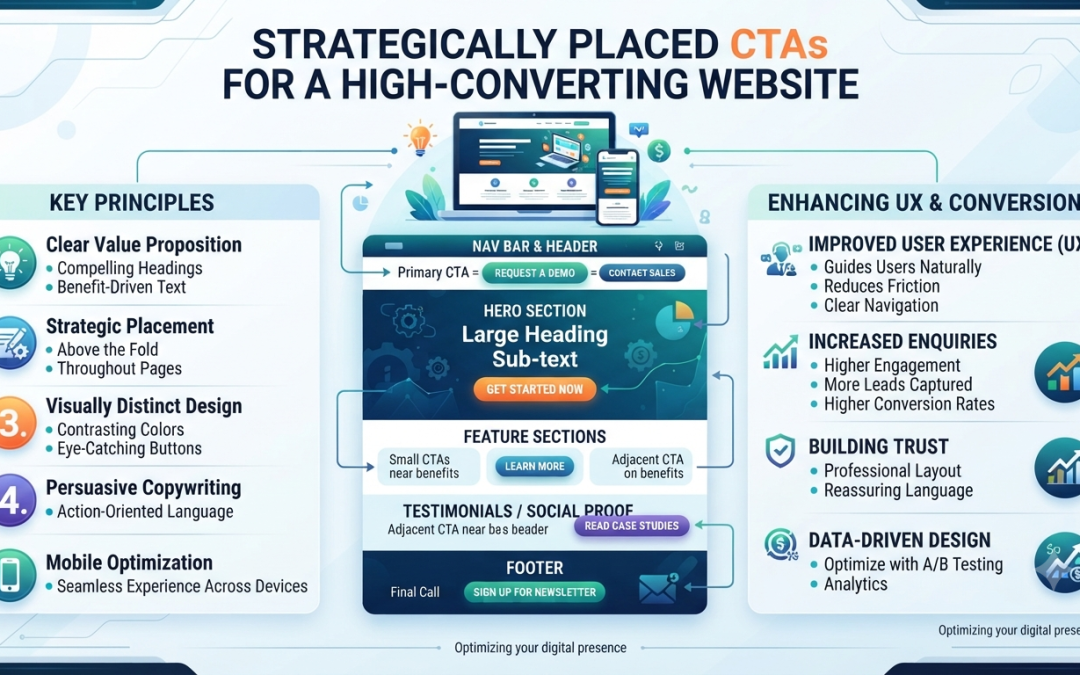
A professional website should do more than simply provide information about a business. It should encourage visitors to take meaningful action, whether that means requesting a quotation, booking a consultation, calling the company, or submitting an enquiry form. One of the most effective tools for achieving this is a well-designed website call-to-action (CTA) button.
Many businesses invest in website design, search engine optimisation (SEO), Google Ads, and social media marketing to attract visitors. However, if those visitors are not guided towards taking the next step, valuable business opportunities may be lost. Even a website with excellent content and high traffic can generate fewer enquiries if its call-to-action buttons are poorly designed or difficult to find.
Website call-to-action buttons provide clear direction by telling visitors exactly what they should do next. When strategically placed throughout a website, they improve user experience, increase engagement, and help convert more visitors into enquiries and customers.
Understanding the importance of effective call-to-action buttons allows businesses to improve their website’s performance while supporting long-term growth.
What Is a Website Call-to-Action Button?
A call-to-action button is a clickable element on a website that encourages visitors to perform a specific action.
Instead of leaving visitors wondering what to do next, CTA buttons provide simple and direct guidance.
Common examples include:
- Contact Us
- Get a Free Quote
- Book a Consultation
- Request a Callback
- Get Started
- Learn More
- Call Now
- Send an Enquiry
Well-designed CTA buttons simplify the customer journey and make it easier for visitors to connect with a business.
Why Call-to-Action Buttons Matter
Every website has a purpose.
Whether the goal is generating leads, increasing sales, or encouraging enquiries, visitors need clear direction.
Without visible call-to-action buttons, users may:
- Leave the website without contacting the business
- Spend unnecessary time searching for contact information
- Become confused about the next step
- Lose interest and visit a competitor’s website
Clear CTA buttons reduce uncertainty and encourage visitors to take immediate action.
Turning Website Visitors Into Enquiries
A website visitor is only valuable if they eventually become a customer or make an enquiry.
Call-to-action buttons help bridge the gap between browsing and taking action.
Effective CTA buttons encourage visitors to:
- Request quotations
- Contact the sales team
- Schedule appointments
- Submit enquiry forms
- Call the business
- Start live chats
The easier it is for visitors to take action, the higher the likelihood of generating quality enquiries.
Improving User Experience
User experience plays a significant role in website performance.
Visitors should always know where to click next without feeling confused.
Well-positioned CTA buttons help users:
- Navigate the website more easily
- Find important actions quickly
- Complete tasks efficiently
- Enjoy a smoother browsing experience
Simple navigation combined with effective call-to-action buttons creates a more user-friendly website that encourages engagement.
Strategic CTA Placement Increases Conversions
The location of a call-to-action button is just as important as its design.
Professional website designers carefully position CTA buttons where visitors are most likely to interact with them.
Common placement locations include:
- Hero banners
- Service pages
- About pages
- Pricing sections
- Blog articles
- Contact sections
- Website headers
- Website footers
Strategic placement ensures visitors can easily find opportunities to contact the business throughout their browsing journey.
Clear Button Text Encourages Action
The wording used on a CTA button has a direct influence on visitor behaviour.
Short, action-oriented phrases often perform better than vague or generic wording.
Examples of effective CTA text include:
- Get Your Free Quote
- Speak With Our Team
- Book Your Consultation
- Contact Us Today
- Request More Information
- Start Your Project
Clear messaging helps visitors understand exactly what will happen when they click the button, increasing confidence and encouraging more enquiries.
Mobile-Friendly CTA Buttons Matter
A large percentage of website traffic now comes from smartphones and tablets.
If CTA buttons are difficult to tap or poorly positioned on smaller screens, potential customers may leave without taking action.
Mobile-friendly CTA buttons should be:
- Easy to locate
- Large enough to tap comfortably
- Clearly visible
- Quick to load
- Accessible across different screen sizes
Responsive website design ensures visitors enjoy a consistent experience regardless of the device they use, helping businesses capture more enquiries from mobile users.
Supporting SEO and Website Performance
Although call-to-action buttons are primarily designed to improve conversions, they also contribute to overall website performance.
When visitors interact with a website by clicking buttons, exploring additional pages, or submitting enquiries, they often spend more time on the website and engage with more content.
Higher engagement may contribute to:
- Better user experience
- Increased page interaction
- Lower bounce rates
- Improved visitor retention
- Stronger overall website performance
Combined with quality content and effective SEO strategies, well-designed CTA buttons help maximise the value of website traffic by encouraging meaningful user actions.
Common Call-to-Action Mistakes
Many websites fail to generate enquiries because their call-to-action buttons are poorly designed or positioned.
Common mistakes include:
-
Buttons that are difficult to find
-
Generic wording such as “Click Here”
-
Too many competing call-to-action buttons
-
Buttons hidden below large sections of content
-
Poor colour contrast
-
Small buttons on mobile devices
-
Broken links
-
Slow-loading contact forms
Even a professionally designed website may lose valuable enquiries if these issues are not addressed.
Matching CTAs With Customer Intent
Different visitors may be at different stages of the buying journey.
Some are simply researching, while others are ready to contact a business immediately.
A well-designed website provides different call-to-action buttons that match visitor intent.
Examples include:
For new visitors:
-
Learn More
-
View Our Services
-
Read Our Portfolio
For interested prospects:
-
Request a Free Quote
-
Speak With Our Team
-
Book a Consultation
For returning visitors:
-
Contact Us
-
Start Your Project
-
Get Support
Providing relevant CTAs throughout the website increases the likelihood of converting different types of visitors.
Building Trust Before Asking for Action
Visitors are more likely to click a call-to-action button when they trust the business.
Before presenting a CTA, websites should provide information that builds credibility.
Trust-building elements include:
-
Customer testimonials
-
Project portfolios
-
Case studies
-
Business certifications
-
Industry experience
-
Client reviews
-
Frequently asked questions
When visitors feel confident in the business, they are more willing to take the next step.
Why Professional Website Design Matters
Creating effective call-to-action buttons involves much more than adding colourful buttons to a webpage.
Professional web designers carefully consider:
-
User behaviour
-
Website layout
-
Colour psychology
-
Content flow
-
Mobile responsiveness
-
Conversion optimisation
-
Overall user experience
Every design decision influences how visitors interact with the website and whether they decide to make an enquiry.
Measuring CTA Performance
One advantage of digital marketing is the ability to measure results.
Website owners can monitor how well call-to-action buttons perform by analysing visitor behaviour.
Performance indicators may include:
-
Button click rates
-
Contact form submissions
-
Phone call enquiries
-
Consultation bookings
-
Quote requests
-
Conversion rates
Reviewing this data helps businesses continuously improve their website and increase enquiry generation over time.
Regular Website Optimisation Improves Results
Customer behaviour changes over time.
A call-to-action button that performed well several years ago may no longer produce the same results.
Regular website optimisation helps businesses:
-
Improve conversion rates
-
Update button messaging
-
Refine page layouts
-
Enhance mobile usability
-
Improve user experience
-
Increase lead generation
Continuous improvement ensures the website remains effective as customer expectations evolve.
Long-Term Benefits of Effective Call-to-Action Buttons
Professionally designed CTA buttons provide many long-term business advantages.
Benefits include:
✔ Increased website enquiries
✔ Higher conversion rates
✔ Better user experience
✔ Improved visitor engagement
✔ Stronger lead generation
✔ More qualified sales opportunities
✔ Better return on digital marketing
✔ Greater business growth
When combined with quality website design, valuable content, and effective SEO, strong call-to-action buttons become one of the most powerful tools for converting website visitors into customers.
Conclusion
Website call-to-action buttons are much more than simple design elements. They play a crucial role in guiding visitors through the customer journey and encouraging them to take meaningful action. Whether the objective is to generate enquiries, request quotations, schedule consultations, or increase sales, effective CTA buttons help transform website traffic into real business opportunities.
A successful call-to-action combines clear wording, strategic placement, attractive design, and a seamless user experience across both desktop and mobile devices. When visitors can quickly understand what to do next, they are more likely to engage with the business instead of leaving the website without making contact.
Professional website design also ensures that CTA buttons work alongside high-quality content, intuitive navigation, trust-building elements, and search engine optimisation to maximise overall website performance. Rather than relying solely on increased traffic, businesses can improve their return on investment by optimising their website to convert more visitors into enquiries.
If your website attracts visitors but generates fewer enquiries than expected, reviewing and improving your call-to-action strategy may be one of the most effective ways to increase conversions and support long-term business growth.
FAQs
1. What is a website call-to-action (CTA) button?
A website call-to-action button is a clickable element that encourages visitors to perform a specific action, such as requesting a quotation, booking a consultation, contacting a business, or submitting an enquiry form. It helps guide users through the customer journey and improves website conversions.
2. Why are call-to-action buttons important?
Call-to-action buttons provide clear direction for visitors and make it easier for them to interact with a business. Well-designed CTA buttons improve user experience, increase engagement, and help convert more website visitors into enquiries and customers.
3. Where should CTA buttons be placed on a website?
CTA buttons are commonly placed in highly visible locations, including hero banners, service pages, pricing sections, blog articles, contact sections, headers, and footers. Strategic placement ensures visitors can easily take action whenever they are ready.
4. How do CTA buttons improve website conversions?
Effective CTA buttons reduce confusion by clearly telling visitors what to do next. Combined with persuasive content, trust-building elements, and a user-friendly design, they encourage more visitors to request information, submit enquiries, or contact the business.
5. Why should businesses regularly optimise their CTA buttons?
Customer behaviour and design trends change over time. Regularly reviewing CTA wording, placement, colours, and performance helps businesses improve conversion rates, generate more enquiries, and maximise the effectiveness of their website.