
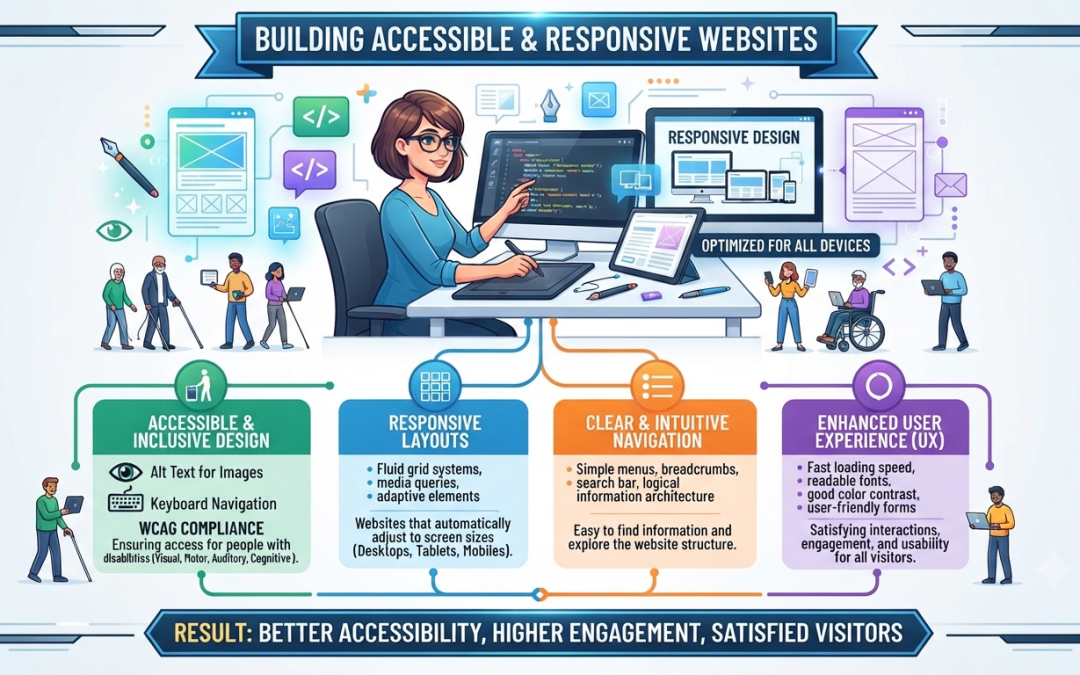
A successful website should be easy for everyone to use, regardless of their age, abilities, or the device they are using. While businesses often focus on attractive design and search engine optimization (SEO), website accessibility is another essential factor that directly affects user experience and long-term business success.
Website accessibility refers to designing and developing websites so that people with different abilities can easily access information, navigate pages, and complete important actions such as submitting enquiries or making purchases.
An accessible website benefits not only users with disabilities but also older adults, mobile users, and visitors with temporary limitations such as poor internet connections or broken devices. By making a website easier to use, businesses can reach a wider audience, improve customer satisfaction, and strengthen their online presence.
Investing in website accessibility demonstrates a commitment to providing a better experience for every visitor while supporting business growth.
What Is Website Accessibility?
Website accessibility is the practice of designing and developing websites that can be used by as many people as possible.
This includes ensuring that visitors can:
- Read website content clearly
- Navigate pages easily
- Use forms without difficulty
- Access information using assistive technologies
- Browse the website on different devices
Accessibility focuses on removing barriers that prevent users from interacting with a website effectively.
A well-designed accessible website improves usability for everyone, not only people with disabilities.
Why Accessibility Improves User Experience
User experience is one of the most important factors influencing how visitors interact with a website.
When users can quickly find information, understand content, and navigate without frustration, they are more likely to stay on the website and take action.
Website accessibility improves user experience by making websites:
- Easier to navigate
- Simpler to understand
- Faster to interact with
- More consistent across devices
- Comfortable to use for different types of visitors
A positive user experience encourages higher engagement and increases the likelihood of generating enquiries or sales.
Makes Websites Easier to Navigate
Visitors should be able to move through a website without confusion.
Accessible websites use clear navigation, logical page structures, and consistent layouts that help users locate information efficiently.
Good navigation includes:
- Clear menus
- Descriptive page headings
- Organised content
- Easy-to-find contact information
- Simple navigation paths
These improvements reduce frustration and help visitors complete important actions more quickly.
Supports Visitors Using Different Devices
People now browse websites using desktop computers, laptops, tablets, and smartphones.
Accessible web design ensures websites function properly regardless of screen size or device type.
This includes:
- Responsive layouts
- Readable text
- Touch-friendly navigation
- Proper spacing between buttons
- Flexible page structures
Providing a consistent experience across devices improves usability while supporting mobile users.
Helps Visitors Read Website Content
Clear content presentation is an important part of accessibility.
Visitors should be able to read information comfortably without unnecessary effort.
Accessible websites often include:
- Easy-to-read fonts
- Good colour contrast
- Logical heading structures
- Well-organised paragraphs
- Descriptive links
These improvements make website content easier to understand while encouraging visitors to spend more time exploring the site.
Improves Form Completion
Many business websites rely on enquiry forms, quotation requests, registrations, or online bookings.
If forms are difficult to complete, visitors may leave before submitting their information.
Accessible forms help users by providing:
- Clear labels
- Simple instructions
- Easy-to-understand error messages
- Logical field order
- Accessible input controls
Improving form usability can increase successful submissions and support higher conversion rates.
Supports Better Search Engine Optimization
Many accessibility best practices also support SEO.
Search engines favour websites that are well structured, easy to navigate, and provide positive user experiences.
Accessible websites often include:
- Proper heading structures
- Meaningful image alt text
- Descriptive page titles
- Clear internal linking
- Well-organised content
These improvements help search engines understand website content more effectively while improving visibility in search results.
Expands Your Potential Audience
An accessible website allows more people to use your services without unnecessary barriers.
This includes:
- People with visual impairments
- People with hearing impairments
- Users with mobility limitations
- Older adults
- Mobile users
- Visitors with slower internet connections
By improving accessibility, businesses can reach a wider audience and provide a better experience for every visitor, creating more opportunities for customer engagement and business growth.
Common Website Accessibility Mistakes
Many businesses unintentionally create barriers that make their websites more difficult to use.
Some of the most common accessibility mistakes include:
- Poor colour contrast
- Small or difficult-to-read text
- Missing image alt text
- Unclear navigation menus
- Forms without proper labels
- Buttons that are difficult to click on mobile devices
- Inconsistent page layouts
Correcting these issues improves usability for all visitors while creating a more professional website experience.
Website Accessibility Supports Business Growth
Website accessibility is more than a technical requirement—it is also a business advantage.
When visitors can browse your website comfortably and complete important actions without difficulty, they are more likely to become customers.
An accessible website can help businesses:
- Reach more potential customers
- Increase user engagement
- Improve enquiry rates
- Strengthen brand credibility
- Support long-term customer satisfaction
Providing an inclusive online experience helps businesses build stronger relationships with a wider audience.
Why Professional Website Development Matters
Building an accessible website requires careful planning, thoughtful design, and proper development practices.
Professional web developers understand how accessibility should be integrated into every stage of a website project.
This includes:
- Planning user-friendly navigation
- Creating responsive layouts
- Optimising website performance
- Structuring content correctly
- Implementing accessibility best practices
- Testing website usability across different devices
Working with experienced professionals helps ensure accessibility is built into the website from the beginning rather than added later.
Accessibility Is an Ongoing Process
Website accessibility should not be viewed as a one-time task.
As websites grow and new content is added, accessibility should continue to be reviewed and maintained.
Regular website maintenance may include:
- Reviewing new content
- Testing website forms
- Updating image alt text
- Improving navigation
- Checking mobile usability
- Fixing accessibility issues
Keeping accessibility up to date ensures every visitor continues to enjoy a positive browsing experience.
Long-Term Benefits of Website Accessibility
Investing in website accessibility provides lasting advantages for both businesses and website visitors.
These benefits include:
✔ Better user experience
✔ Improved website usability
✔ Stronger SEO performance
✔ Increased customer engagement
✔ Higher conversion opportunities
✔ Greater audience reach
✔ Enhanced brand reputation
✔ Long-term business growth
An accessible website creates a better online experience while supporting the overall success of your digital presence.
Conclusion
Website accessibility plays an important role in creating websites that are easy to use, inclusive, and effective. By improving navigation, readability, mobile usability, and website structure, businesses can provide a better experience for every visitor while supporting stronger search engine performance.
Accessible websites help remove barriers that may prevent users from interacting with your business online. They also contribute to improved customer satisfaction, greater engagement, and increased opportunities for enquiries and conversions.
Investing in professional website design and development that prioritises accessibility is a practical way to strengthen your online presence and support long-term business growth.
FAQs
1. What is website accessibility?
Website accessibility is the practice of designing and developing websites so that people of all abilities can access, navigate, and use online content effectively. It focuses on removing barriers and improving usability for every visitor.
2. Why is website accessibility important for businesses?
An accessible website improves user experience, allows more people to use your website, increases customer engagement, and supports stronger SEO performance. It also helps businesses reach a wider audience and create a more inclusive online presence.
3. Does website accessibility improve SEO?
Yes. Many accessibility best practices, such as using proper heading structures, descriptive image alt text, clear navigation, and well-organised content, also help search engines understand your website more effectively, which can support better search visibility.
4. How can businesses improve website accessibility?
Businesses can improve accessibility by using readable fonts, sufficient colour contrast, descriptive headings, accessible forms, responsive layouts, meaningful image alt text, and clear navigation. Regular website maintenance and testing also help maintain accessibility over time.
5. Why should website accessibility be included in web design?
Including accessibility during the website design and development process ensures the website is easier to use from the start. It helps improve usability, reduces future redesign costs, supports SEO, and creates a better experience for all users across different devices.