
Search Engine Optimization (SEO) is undergoing one of the most significant transformations in its history. With the rise of generative artificial intelligence and AI-driven search engines, the way users discover information online has fundamentally changed. Search engines no longer simply display a list of traditional web links; they synthesize answers, summarize complex topics, and provide conversational responses directly on the search results page.
For businesses and digital marketers, this shift means that traditional SEO techniques alone are no longer sufficient. To maintain high visibility, attract organic traffic, and convert visitors into customers, organizations must adapt their search strategies to align with the evolving landscape of AI-powered search engines.
Understanding the role of artificial intelligence in modern search engine optimization—and knowing how to use AI for keyword research effectively—is essential for any business aiming to grow its online presence.
What is the Role of Artificial Intelligence in Modern Search Engine Optimization?
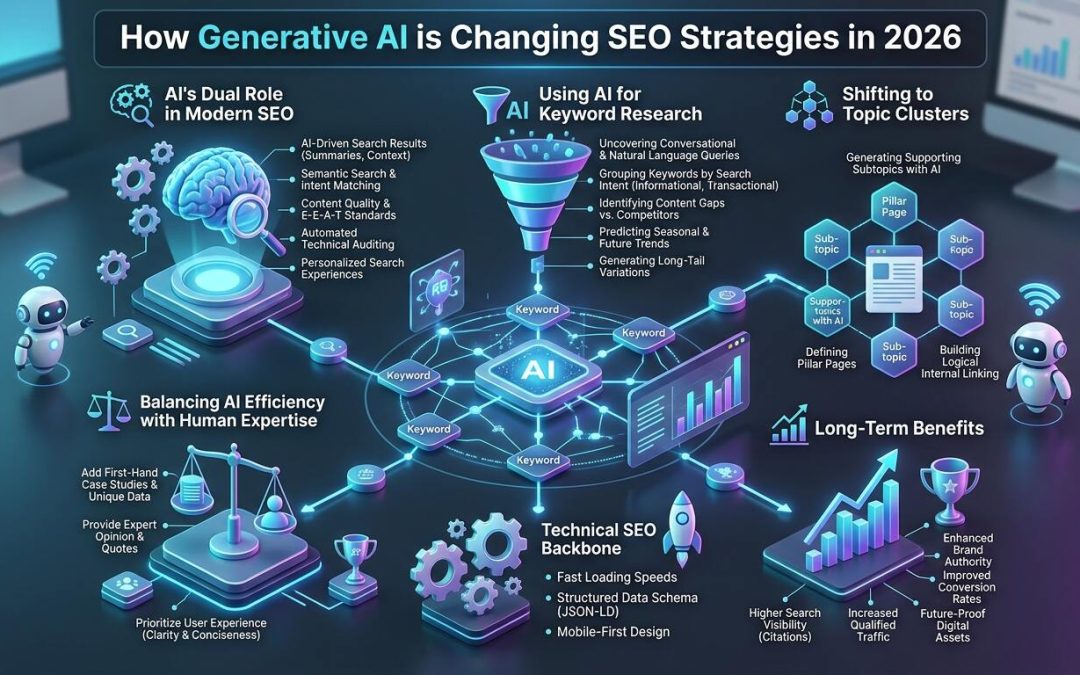
Artificial intelligence plays a dual role in modern SEO: it shapes how search engines evaluate content, and it empowers marketers to optimize their digital strategies with greater precision.
Key areas where AI impacts modern SEO include:
- AI-driven search engine results
- Prioritize searcher intent and natural language context
- Evaluate websites for Experience, Expertise, Authoritativeness, and Trustworthiness (E-E-A-T)
- Monitor website health, core web vitals, broken links, and site architecture
- Customize results based on user location, query history, and device context
How to Use AI for Keyword Research in SEO
Keyword research is no longer limited to collecting high-volume search terms from static databases. AI-powered tools allow SEO strategists to analyze conversational search queries, discover long-tail opportunities, and map search intent faster than ever before.
Effective strategies for using AI in keyword research include:
- Identify how people ask questions verbally or in multi-turn conversations
- Cluster thousands of keywords into distinct intent buckets—informational, transactional, navigational, or commercial
- Evaluate your competitor’s content against search trends to reveal valuable topics
- Analyze historical search patterns to predict emerging topics
- Generate highly targeted, niche search phrases that carry lower competition
Shifting from Traditional Keywords to Topic Clusters
Relying on isolated keywords can lead to fragmented content strategies. Modern search engines evaluate topic authority—how comprehensively a website covers a subject area.
Creating topic clusters with AI involves:
- Developing broad, authoritative landing pages that cover a core subject in detail
- Utilizing AI to identify related sub-questions and niche scenarios
- Interconnecting supporting blog posts back to the pillar page to demonstrate topical depth
Balancing AI Efficiency with Authentic Human Expertise
While AI speeds up content creation and data analysis, over-relying on fully automated, generic AI text can harm search rankings. Search engines prioritize original insights, verified facts, and first-hand experience.
To maintain sustainable rankings:
- Incorporate real-world business results, client stories, and unique proprietary data
- Include quotes from industry practitioners to establish authority that AI models cannot replicate
- Ensure content directly answers user questions clearly
The Importance of Technical SEO in an AI-Driven Era
Technical performance remains the backbone of search engine visibility. Even the best AI-optimized content will underperform if a website suffers from slow loading speeds, poor mobile responsiveness, or crawling issues.
Key technical factors to maintain include:
- Optimizing scripts and media assets to meet strict performance metrics
- Implementing clear JSON-LD schema markup to help AI engines interpret site data accurately
- Ensuring seamless navigation and rendering across all screen sizes and mobile operating systems
Why Businesses Need an Evolving SEO Strategy
Search engine algorithms undergo continuous updates to improve user experience and filter low-value content. Businesses that treat SEO as a one-time project risk losing market share to competitors who actively refine their strategies.
Ongoing SEO maintenance helps businesses:
- Identify declining pages and refresh them with updated information
- Quickly realign site architecture and content formats with the latest search engine guidelines
- Drive higher quality organic leads without relying solely on paid ad campaigns
Long-Term Benefits of AI-Integrated SEO Strategies
Investing in an AI-informed, user-centric search strategy yields sustainable competitive advantages.
Key long-term benefits include:
- Consistently rank across standard search listings and AI-generated answer summaries
- Attract visitors who are actively searching for your specific services or products
- Position your business as an industry leader through comprehensive content coverage
- Engage users with clear content structure and intent-aligned call-to-actions
- Ensure your digital web infrastructure adapts seamlessly to emerging technologies
Choosing the Right SEO and Digital Agency
Partnering with an experienced digital agency helps businesses navigate rapid search landscape shifts without guesswork.
Look for a digital marketing partner that offers:
- In-depth evaluations of site architecture, keyword rankings, and competitor benchmarks
- Strategies that blend technical accuracy with engaging, authority-building content
- Clear metrics that track keyword performance, organic traffic growth, and lead generation
- Seamless combination of web development, SEO, and performance advertising to maximize ROI
Conclusion
Generative AI is reshaping search engine optimization by shifting the focus toward deep search intent, topical authority, and context-rich answers. However, technology alone cannot replace strategic planning, technical excellence, and genuine human expertise.
To secure lasting organic visibility, businesses must pair automated data insights with first-hand experience, verified E-E-A-T signals, and robust technical site health. Structuring content into logical topic clusters ensures search engines recognize your brand as a primary industry authority.
By continuously refining site speed, structured data, and conversational keyword strategies, you protect your digital assets against algorithm shifts. Future-proof your digital presence and turn AI-driven search into measurable business growth by contacting our expert SEO team today for a comprehensive strategy session.
FAQs
1. What is the role of artificial intelligence in modern search engine optimization?
Artificial intelligence helps search engines better understand context, semantic relationships, and user intent, delivering synthesized answers on search results pages. For marketers, AI assists in technical auditing, keyword discovery, and content optimization, enabling data-backed SEO strategies.
2. How do I use AI for keyword research in SEO?
You can use AI tools to discover conversational search queries, analyze long-tail search intent, cluster relevant keywords into topic groups, identify competitor content gaps, and predict emerging search trends.
3. Does AI content rank well on Google and search engines?
AI-assisted content can rank well if it is high quality, accurate, and provides genuine value to users. However, content that relies purely on automated text without human review, original insights, or E-E-A-T (Experience, Expertise, Authoritativeness, and Trustworthiness) risks being penalized or devalued.
4. How does Generative Search affect organic traffic to websites?
Generative AI summaries answer simple questions directly on the search results page, which can reduce click-through rates for basic informational queries. However, it increases the quality of traffic coming from complex, high-intent queries when your content is cited as a source or featured in topic clusters.
5. How often should a business update its SEO strategy?
SEO is an ongoing process. Businesses should review their keyword performance and technical site health monthly, update core web content regularly, and adjust overall strategy quarterly to respond to search engine algorithm updates and changing search behaviors.