
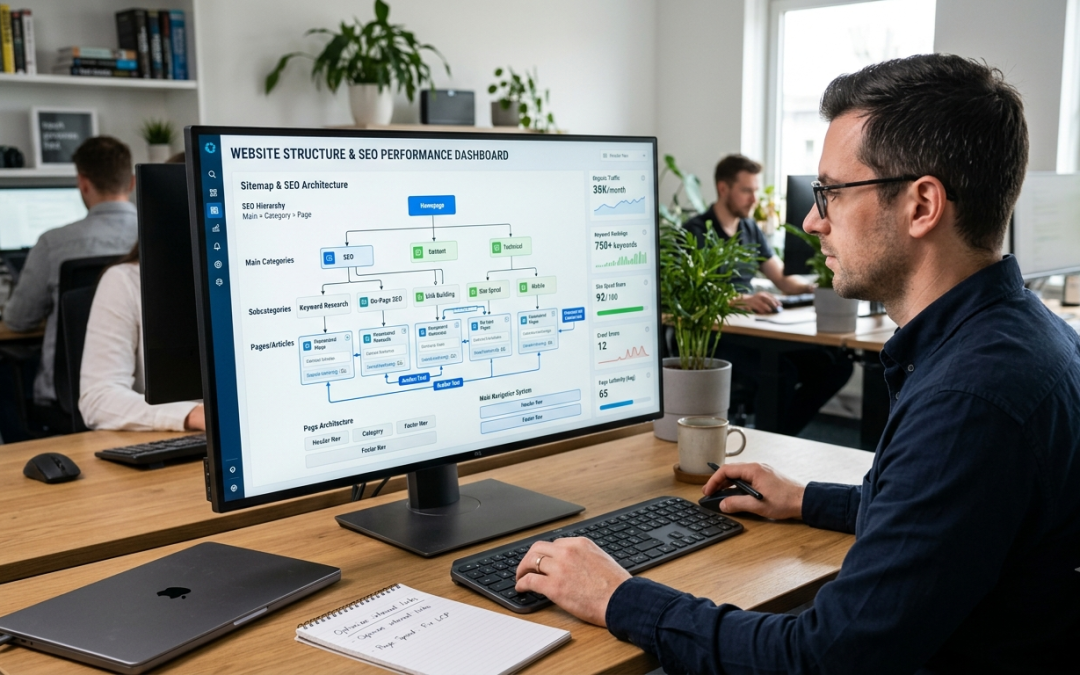
Website structure is one of the most important foundations of SEO success. It determines how search engines crawl your site, how users navigate your content, and how effectively your pages rank in search results.
Even if your content is high quality and your keywords are well optimized, a poor website structure can limit your visibility and reduce your SEO performance.
A well-organized structure helps search engines understand your website easily, distributes authority across pages, and improves user experience, which directly contributes to higher rankings and better engagement.
What Is Website Structure in SEO?
Website structure refers to how pages are organized, grouped, and linked together within a website.
It includes:
- Navigation menus
- Page hierarchy
- Internal linking system
- URL structure
- Content categories and clusters
- Site architecture design
A clear structure ensures that both users and search engines can easily understand the relationship between different pages.
For example, a well-structured website follows a logical flow:
Home → Services → Specific Service Page → Related Blog Articles
This hierarchy helps search engines understand which pages are most important.
Why Website Structure Matters for SEO
Search engines like Google use website structure to:
- Crawl pages efficiently
- Understand content relationships
- Identify important pages
- Distribute ranking authority (link equity)
- Index content faster
If your structure is confusing, search engines may struggle to discover or prioritize your pages correctly.
A strong structure ensures that important pages receive more visibility and ranking potential.
Better Crawlability and Indexing
Crawlability refers to how easily search engine bots can access and navigate your website.
If your structure is well-designed:
✔ All important pages are easily discoverable
✔ No orphan pages (pages without links)
✔ Efficient use of crawl budget
✔ Faster indexing of new content
However, poor structure can lead to:
❌ Hidden pages
❌ Slow indexing
❌ Missed content
❌ Lower rankings
Search engines rely heavily on internal links to discover content, so structure plays a key role in SEO success.
Website Hierarchy and Content Organization
A clear hierarchy organizes content from general to specific.
Example:
Home
→ Blog
→ SEO Blog
→ Technical SEO Articles
This structure helps search engines understand:
- Topic importance
- Content depth
- Authority distribution
A flat structure (too many pages at the same level) can confuse search engines and weaken SEO performance.
Internal Linking and SEO Power Distribution
Internal linking connects pages within your website and helps distribute ranking authority.
Benefits of internal linking:
✔ Helps Google understand page relationships
✔ Passes SEO value between pages
✔ Improves indexing speed
✔ Increases page visibility
✔ Encourages users to explore more content
For example, linking from a blog post to a service page can help boost that service page’s ranking potential.
Strong internal linking is one of the most powerful SEO structure strategies.
URL Structure and SEO Clarity
Clean URL structures help both users and search engines understand page content.
Good URL examples:
- /seo-services/
- /website-structure-seo/
- /technical-seo-guide/
Poor URL examples:
- /page?id=12345
- /folder/page1/test/new/
SEO-friendly URLs should be:
✔ Short
✔ Descriptive
✔ Keyword-relevant
✔ Easy to read
A clean URL structure improves trust, click-through rates, and indexing clarity.
Navigation and User Experience (UX)
Website navigation is a key part of structure that directly affects user experience.
Good navigation ensures users can:
- Find information quickly
- Understand website offerings
- Move between pages easily
- Access important content without confusion
Poor navigation increases bounce rates and reduces engagement.
Search engines also measure user behavior signals, so a better UX indirectly improves SEO rankings.
Common Website Structure Mistakes
Many websites struggle with SEO due to structural problems such as:
❌ No clear hierarchy
❌ Too many clicks to reach important pages
❌ Missing internal links
❌ Duplicate or overlapping content
❌ Confusing navigation menus
❌ Orphan pages
❌ Poor URL structure
These issues make it harder for search engines to understand your website and can significantly reduce rankings.
Technical SEO and Website Structure
Website structure is closely connected to technical SEO.
Important technical factors include:
- XML sitemap structure
- Robots.txt configuration
- Canonical tags
- Crawl depth
- Page load paths
- Site architecture optimization
Search engines use these signals to evaluate how well-organized your website is.
A technically sound structure improves indexing efficiency and ranking stability.
Content Clusters and Topical Authority
Modern SEO focuses heavily on topical authority.
This means grouping related content into clusters.
Example:
Main Topic (Pillar Page)
- SEO Services
Supporting Content
- On-page SEO
- Technical SEO
- Link building
- Keyword research
This structure helps search engines understand that your website is an authority on a topic.
Content clusters also improve internal linking and strengthen overall SEO performance.
Mobile Structure and SEO Performance
With most users browsing on mobile devices, mobile structure is essential.
A mobile-friendly structure includes:
✔ Responsive design
✔ Simple navigation
✔ Fast-loading pages
✔ Clear hierarchy
Poor mobile structure leads to:
❌ High bounce rates
❌ Lower engagement
❌ Reduced rankings
Google uses mobile-first indexing, meaning mobile structure directly affects SEO performance.
Tools to Analyze Website Structure
Several SEO tools help analyze and improve structure:
- Google Search Console (indexing & coverage)
- Screaming Frog (crawl analysis)
- Ahrefs (internal linking & structure review)
- SEMrush Site Audit
- PageSpeed Insights (performance impact)
These tools help identify structural issues such as broken links, orphan pages, and slow-loading pages.
How to Improve Website Structure for SEO
To optimize website structure:
✔ Create a clear hierarchy
✔ Use logical categories
✔ Strengthen internal linking
✔ Reduce page depth (3 clicks rule)
✔ Optimize URL structure
✔ Build topic clusters
✔ Improve navigation menus
✔ Fix orphan pages
These improvements help search engines understand your website better and improve rankings over time.
Real-World Example of Good Structure
A well-structured service website might look like:
Home
→ Services
→ SEO Services
→ Technical SEO
→ Blog
→ SEO Articles
→ Contact
This structure ensures:
- Easy navigation for users
- Clear hierarchy for search engines
- Strong internal linking flow
- Better keyword targeting
Future of Website Structure in SEO
As search engines become more advanced, website structure will continue to play a major role in SEO.
Future SEO trends include:
- AI-based crawling understanding structure better
- Greater importance of content clusters
- More focus on user journey mapping
- Stronger emphasis on semantic relationships
Websites with poor structure will struggle to compete in future search rankings.
Conclusion
Website structure is a core foundation of SEO performance. It affects crawlability, indexing, user experience, internal linking, and overall search visibility.
A well-planned structure helps search engines understand your content, improves rankings, and enhances user engagement.
Businesses that invest in strong website architecture are more likely to achieve long-term SEO success and sustainable organic growth.
More Info
- https://www.iowebstudio.com/
- https://www.iowebstudio.com/blog/
- Google Core Web Vitals (official):
https://developers.google.com/search/docs/appearance/core-web-vitals
FAQs
1. What is website structure in SEO?
Website structure is how pages are organized and linked together within a site to help search engines and users navigate content.
2. Why is website structure important for SEO?
It improves crawlability, indexing, user experience, and helps search engines understand content relationships.
3. What is a good website structure?
A clear hierarchy with logical navigation, internal linking, and SEO-friendly URLs.
4. How does internal linking affect SEO?
Internal linking distributes authority and helps search engines discover and rank pages.
5. What are common website structure mistakes?
Poor navigation, orphan pages, weak internal linking, and confusing hierarchies.
6. How many clicks should important pages be from the homepage?
Ideally, important pages should be reachable within 2–3 clicks.
7. Does mobile structure affect SEO?
Yes, Google uses mobile-first indexing, so mobile structure is very important.
8. What tools help analyze website structure?
Google Search Console, Screaming Frog, Ahrefs, and SEMrush are commonly used tools.