
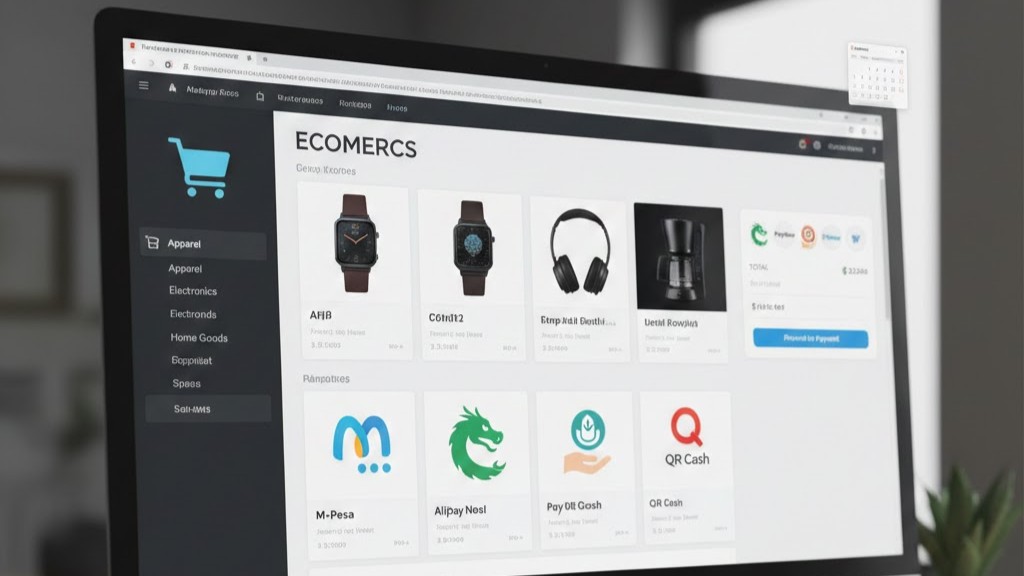
Integrating local payment gateways into an ecommerce website is a critical step for businesses aiming to provide a seamless checkout experience, increase conversion rates, and enhance customer trust. In regions like Malaysia, Singapore, Indonesia, and other ASEAN markets, customers prefer familiar and locally supported payment methods such as FPX, DuitNow, GrabPay, Touch ‘n Go eWallet, ShopeePay, Bank Transfer, and local credit card channels. This article provides a comprehensive technical guide on how to integrate these payment gateways effectively into modern ecommerce platforms.
Understanding the Role of Local Payment Gateways
Local payment gateways serve as a secure bridge between the customer, the ecommerce platform, and the financial institution. They process payments, validate transactions, and ensure funds are transferred safely. Unlike global gateways (Stripe, PayPal), local gateways must comply with local banking rules, regulatory frameworks, and region-specific consumer behaviors.
Businesses that ignore local payment methods often see higher cart abandonment, because customers prefer familiar channels. For example, in Malaysia, over 60% of online shoppers choose FPX or eWallets over credit cards due to lower fees, faster authentication, and a higher trust level.
Key functions of local gateways include:
-
Secure payment processing
-
Fraud detection & KYC compliance
-
Local bank and eWallet integrations
-
Instant transfer capabilities
-
Multi-currency support (depending on provider)
A strong understanding of these functions helps developers create a stable payment environment that reduces downtime, improves user satisfaction, and minimizes failed transactions.
When integrating, it is crucial to analyze API documentation, authentication methods (API keys, tokens, signatures), callback URLs, and webhook events to ensure the system can handle asynchronous payment notifications. Failure to configure these items correctly may result in incomplete or inaccurate order status updates.
Choosing the Right Local Payment Gateway
Selecting the right gateway involves evaluating several technical and business factors. Some gateways focus on bank transfers (FPX), while others support eWallets (TNG, Boost, GrabPay), and some offer all-in-one solutions such as iPay88, Billplz, SenangPay, Razer Merchant Services, and Payex.
Criteria to consider:
Technical Reliability
-
API response time
-
Uptime percentage (aim for 99.9%+)
-
Webhook speed and reliability
-
Sandbox environment availability
Security Compliance
-
PCI DSS Level 1
-
Fraud detection systems
-
Tokenization support
-
3D Secure (3DS) for card payments
Supported Payment Methods
-
FPX banks
-
Local debit/credit cards
-
Islamically compliant payment options
-
eWallet compatibility
Integration Scope
Some payment gateways provide:
-
Direct API integration
-
Hosted payment pages (HPP)
-
Redirect-based systems
-
Mobile SDK (iOS & Android)
You must choose a gateway that aligns with your ecommerce platform (WooCommerce, Shopify, Magento, Laravel, Node.js). A mismatch in integration types leads to inconsistent customer experiences and payment errors.
Preparing Your Ecommerce Backend for Integration
Before integrating a payment gateway, your backend must be structured to handle transactional logic, callbacks, and secure data flows. Key components include:
Database Preparation
Create tables for:
-
Orders
-
Transaction logs
-
Payment events
-
Payment error logs
-
API credential storage (encrypted)
Order Status Workflow
Your system must support dynamic statuses:
-
Pending
-
Awaiting payment
-
Paid
-
Failed
-
Refunded
-
Disputed
Environment Configuration
Use environment variables for:
-
API keys
-
Secret tokens
-
Webhook URLs
-
Encryption salts
Never store sensitive information in plain text or frontend code.
Security Layers
Implement:
-
HTTPS
-
CSRF protection
-
IP whitelisting (if supported)
-
HMAC signature validation
A well-prepared backend ensures smoother integration and prevents failures during peak traffic.
Understanding API Documentation & Authentication
Some gateways use Hosted Payment Pages (HPP) to simplify integration. This means the user is redirected to the payment provider’s secure page to complete the transaction.
Benefits:
-
No PCI DSS burden
-
No sensitive data stored in your system
-
Faster integration
-
Secure authentication managed by gateway
Use cases:
-
Small ecommerce stores
-
Businesses without development resources
-
Platforms requiring quick implementation
Your role is ensuring:
-
Order creation before redirect
-
Callback handling after payment
-
User redirection to “Success” or “Failed” page
-
Logging all payment events
Implementing Hosted Payment Pages
Some gateways use Hosted Payment Pages (HPP) to simplify integration. This means the user is redirected to the payment provider’s secure page to complete the transaction.
Benefits:
-
No PCI DSS burden
-
No sensitive data stored in your system
-
Faster integration
-
Secure authentication managed by gateway
Use cases:
-
Small ecommerce stores
-
Businesses without development resources
-
Platforms requiring quick implementation
Your role is ensuring:
-
Order creation before redirect
-
Callback handling after payment
-
User redirection to “Success” or “Failed” page
-
Logging all payment events
Direct API Integration for Full Control
For larger ecommerce platforms, direct API integration provides greater control over user experience. Payment happens inside your website without redirects. This requires:
-
PCI DSS compliance
-
Server-to-server communication
-
Token-based payment processing
-
Secure card detail handling via JS SDK or iFrame
You must implement:
-
Card validation
-
Payment tokenization
-
Retry mechanisms
-
Real-time error handling
Direct API integration offers smoother UX but requires advanced security implementation.
Setting Up Webhooks & Callback URLs
Local gateways provide sandbox environments for development. Testing scenarios include:
-
Successful payment
-
Failed payment
-
Timeout errors
-
Signature mismatch
-
Partial payment
-
Refund process
-
Bank downtime simulation
Test full checkout flow:
1. Add to cart
2.Checkout
3. Redirect or API payment
4. Callback received
5. Order updated
6. Email/SMS notification
Comprehensive testing prevents losses due to failed transactions after launch.
Ensuring Security & Compliance
Your ecommerce website must adhere to security standards:
-
HTTPS/TLS 1.2 or higher
-
AES-256 encryption for API secrets
-
HMAC validation
-
PCI DSS compliance if storing card data
-
Regular penetration testing
-
Rate limiting to prevent brute-force attempts
Local regulators such as Bank Negara Malaysia (BNM) require strict data protection, audit trails, and KYC standards. Failure to comply may result in fines or suspension.
Monitoring, Optimization & Failover Handling
After integration, continuous monitoring ensures stability. Monitor:
-
Payment success rate
-
Drop-off rate
-
Slow API responses
-
Bank downtime patterns
-
Webhook failures
Implement:
-
Retry logic for failed callbacks
-
Backup payment gateways
-
Automatic failover routing
-
Error alerts via email/Slack
A robust monitoring system reduces failed payments and increases revenue.
Frequently Asked Questions (FAQs)
1. How long does it take to integrate a payment gateway?
Between 3–10 days depending on API complexity and testing requirements.
2. Which local gateways are best in Malaysia?
Common choices include iPay88, Billplz, SenangPay, FPX, TNG eWallet, GrabPay, Razer, and Payex.
3. Do I need PCI DSS compliance?
Yes, if you store or process card data directly.
4. Can I integrate multiple payment gateways?
Yes. Multi-gateway architecture increases reliability and reduces downtime.
5. Why do some payments fail?
Common reasons include bank downtime, invalid signature, expired tokens, or slow response times.
Conclusion
Integrating local payment gateways into an ecommerce website is a highly technical yet essential process for delivering a secure, seamless, and trustworthy online shopping experience. With proper API integration, security implementation, callback handling, and monitoring, businesses can significantly increase conversion rates and minimize payment failures.
If your business needs professional ecommerce integration, secure payment setup, or custom API development. Contact IO Web Studio today.