
A well-built website is one of the most valuable assets a business can own. It attracts customers, builds credibility, and supports long-term growth. But a successful website is rarely the result of a developer working alone. It comes from a strong partnership between the client and the developer.
Many website projects run into trouble not because of bad code, but because of unclear goals, missed communication, or changing expectations. When clients and developers are not aligned, timelines slip, budgets grow, and the final product often falls short of what was imagined.
This is why learning how to work with a web developer is just as important as choosing the right one. A clear, collaborative process helps ensure your website is delivered on time, on budget, and exactly how you envisioned it.
What Does It Mean to Work With a Web Developer?
Working with a web developer means more than handing over a list of requirements and waiting for a finished site. It is an ongoing partnership that involves planning, feedback, decision-making, and problem-solving.
During a typical website build, you and your developer will handle:
- Project goals and scope
- Website structure and features
- Design and functionality
- Content and branding
- Testing and quality assurance
- Launch and ongoing support
The goal is to create a website that meets your business needs while remaining technically sound, fast, and easy to maintain.
Why a Smooth Website Build Matters
Not every project with a large budget succeeds, and not every simple website fails. The difference often comes down to how well the client and developer work together.
A smooth website build helps you:
- Avoid costly delays and rework
- Stay within your budget
- Get the features you actually need
- Reduce stress during the project
- Launch with confidence
- Build a long-term working relationship
Good collaboration early on often prevents major problems later.
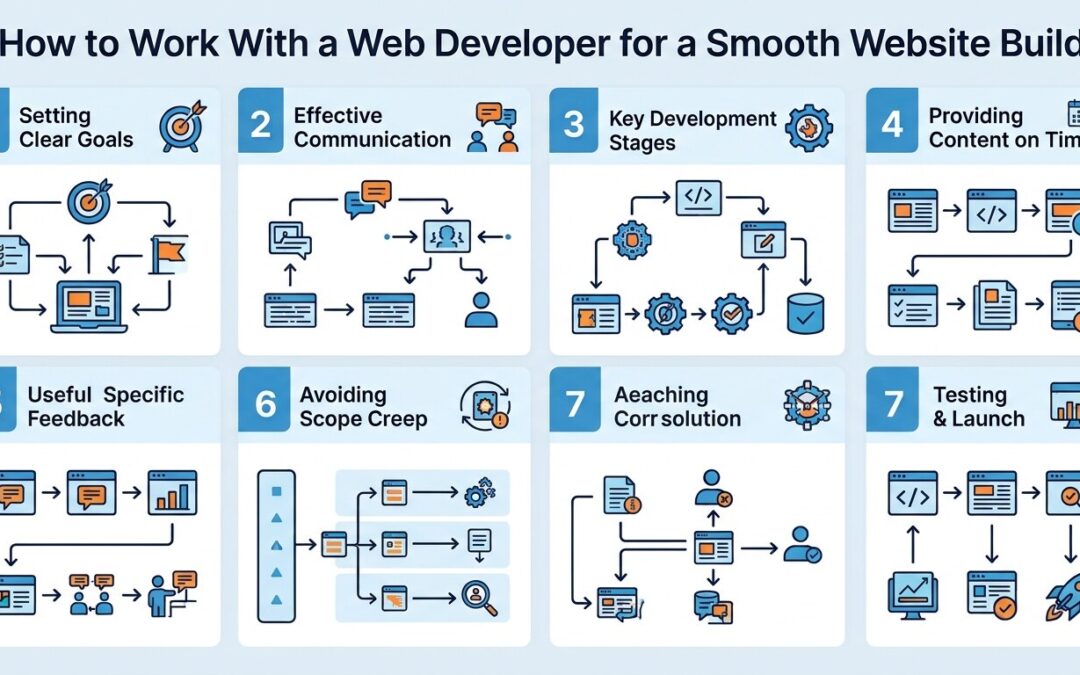
Setting Clear Goals Before Development Begins
One of the biggest mistakes clients make is starting a project without a clear direction.
Before any design or code is written, you and your developer should agree on:
- The purpose of the website
- Your target audience
- Key features and functionality
- Success metrics
- Budget and timeline
- Content responsibilities
A developer can build almost anything, but without clear goals, the project can quickly lose focus.
Communicating Effectively With Your Developer
Clear communication is the foundation of a successful website build.
Developers are problem-solvers, not mind readers. The more clearly you explain your needs, the better the result.
Helpful communication practices include:
- Using plain language to describe your ideas
- Providing examples of websites you like
- Asking questions when something is unclear
- Giving feedback promptly
- Keeping conversations in one place
Good communication reduces misunderstandings and keeps the project moving forward.
Understanding the Development Process
Every developer works differently, but most website builds follow a similar path.
Common stages include:
- Discovery and planning
- Wireframes and structure
- Design mockups
- Development and coding
- Testing and revisions
- Launch and handover
Understanding these stages helps you know what to expect and when your input is needed most.
Providing Content and Assets on Time
Content is often the biggest cause of website delays.
Developers cannot build pages without text, images, logos, and other assets.
To keep things on track, prepare:
- Written content
- High-quality images
- Branding files
- Product or service information
- Legal pages
Delivering content early helps your developer work efficiently and keeps the timeline realistic.
Giving Useful Feedback Without Slowing Things Down
Feedback is essential, but how you give it matters.
Helpful feedback is:
- Specific and clear
- Focused on goals, not personal preference
- Delivered in one round where possible
- Prioritized by importance
Vague comments like “I don’t like it” can lead to unnecessary revisions and frustration for both sides.
Why Changes and Scope Creep Hurt Projects
One of the most common reasons website projects go over budget is scope creep.
Scope creep happens when:
- New features are added mid-project
- Goals change without discussion
- “Small tweaks” pile up
Changes are normal, but they should be discussed openly. A good developer will explain how changes affect timeline and cost.
Testing, Launching, and Going Live
Before launch, your website should be thoroughly tested.
This includes:
- Mobile responsiveness
- Browser compatibility
- Page speed
- Form functionality
- Security checks
A smooth launch happens when testing is treated as a priority, not a last-minute task.
Building Trust Through Transparency and Honesty
Trust is the invisible thread that holds a website project together. When clients and developers are honest with each other, problems get solved faster and decisions become easier.
Transparency means being upfront about your budget, your deadlines, and your expectations. It also means being honest when you do not understand something technical. Developers would rather explain a concept twice than fix a problem caused by a misunderstanding.
On the other side, a trustworthy developer will be transparent about timelines, limitations, and costs. They will tell you when a feature is unrealistic, when a deadline is too tight, or when a request will increase the budget. This kind of honesty protects both sides from disappointment.
How clients can build trust:
- Share your real budget and deadlines from the start
- Be honest when you do not understand something technical
- Admit when your goals or priorities change
- Follow through on promised feedback and content
- Avoid hiding information that could affect the project
How developers build trust:
- Give realistic timelines instead of overpromising
- Explain limitations and trade-offs clearly
- Flag budget risks before they become problems
- Communicate delays as soon as they happen
- Deliver on agreed milestones consistently
Trust also grows when both parties follow through on their commitments. If you promise to send content by Friday, send it. If your developer promises a demo on Monday, expect it. Small acts of reliability build a working relationship that makes the entire project smoother.
Managing Expectations Around Timelines and Budgets
Every website project exists within real-world limits. Time, money, and resources are not unlimited, and pretending otherwise only leads to frustration.
One of the best ways to work with a developer is to treat timelines and budgets as shared responsibilities. Instead of assuming the developer will “figure it out,” discuss priorities openly. Ask questions like:
- Which features are essential, and which are nice to have?
- What happens if we need more time?
- How are additional costs calculated?
- What is the realistic launch date?
A good developer will help you understand trade-offs. Adding a complex feature may push the launch date. Rushing the timeline may mean skipping certain tests. Knowing these trade-offs in advance helps you make better decisions.
It also helps to build in a buffer. Most projects encounter small delays, whether from feedback rounds, content delivery, or unexpected technical issues. A realistic timeline includes room for these moments.
Handling Disagreements and Technical Decisions
Not every decision in a website build will be easy. You and your developer may disagree about design choices, features, or priorities. That is normal.
What matters is how those disagreements are handled. Productive conversations focus on the problem, not the person. Instead of saying “This is wrong,” try explaining what you are trying to achieve. For example, “I am worried customers will not find the contact button” is more useful than “I do not like the layout.”
It also helps to respect your developer’s expertise. If they push back on a request, ask why. Often, they are considering factors you may not have thought about, such as performance, accessibility, or long-term maintenance.
At the same time, you are the expert on your business. A good developer will listen to your concerns and find solutions that balance technical best practices with your goals.
Tips for handling disagreements:
- Focus on the problem, not the person
- Explain the goal behind your concern
- Ask your developer to explain their reasoning
- Separate personal preference from business needs
- Agree on how final decisions will be made
Tips for handling technical decisions:
- Ask for options instead of a single answer
- Request simple explanations, not jargon
- Consider long-term maintenance, not just launch
- Weigh performance and security impacts
- Document decisions so both sides remember them
Preparing for the Handover and Future Updates
The end of a website build is not the end of the relationship. How you handle the handover sets the tone for everything that comes next.
Before the project wraps up, make sure you receive:
- Access to all accounts and systems
- Documentation for how the site works
- Training on how to make basic updates
- A clear list of what was built
- Information on ongoing maintenance options
Ask your developer how future changes should be handled. Will you be able to update content yourself? Who do you contact if something breaks? Are there any recurring costs for hosting, plugins, or licenses?
Preparing for the handover properly saves you time and money later. It also ensures you are not left stranded with a website you do not understand.
Conclusion
Working with a web developer is a partnership. Clear goals, honest communication, and mutual respect are the keys to a smooth website build.
Whether you are launching a small business site or a complex custom platform, a collaborative approach helps you avoid delays, reduce stress, and achieve a website that truly supports your goals.
FAQs
1. How do I work with a web developer effectively?
Work with a web developer by setting clear goals, communicating openly, providing content on time, and giving specific feedback. A collaborative approach keeps the project on track.
2. How long does a website build take?
Timelines depend on the size and complexity of the project. A simple website may take a few weeks, while custom development can take several months.
3. What should I prepare before hiring a web developer?
Prepare your goals, content, branding assets, examples of websites you like, and a realistic budget. The more prepared you are, the smoother the process.
4. Can I make changes during the website build?
Yes, but changes should be discussed. Some changes are minor, while others may affect timeline and cost. Clear communication helps manage expectations.
5. What happens after my website launches?
After launch, your developer may provide maintenance, updates, security monitoring, and performance improvements. Discuss ongoing support early.