
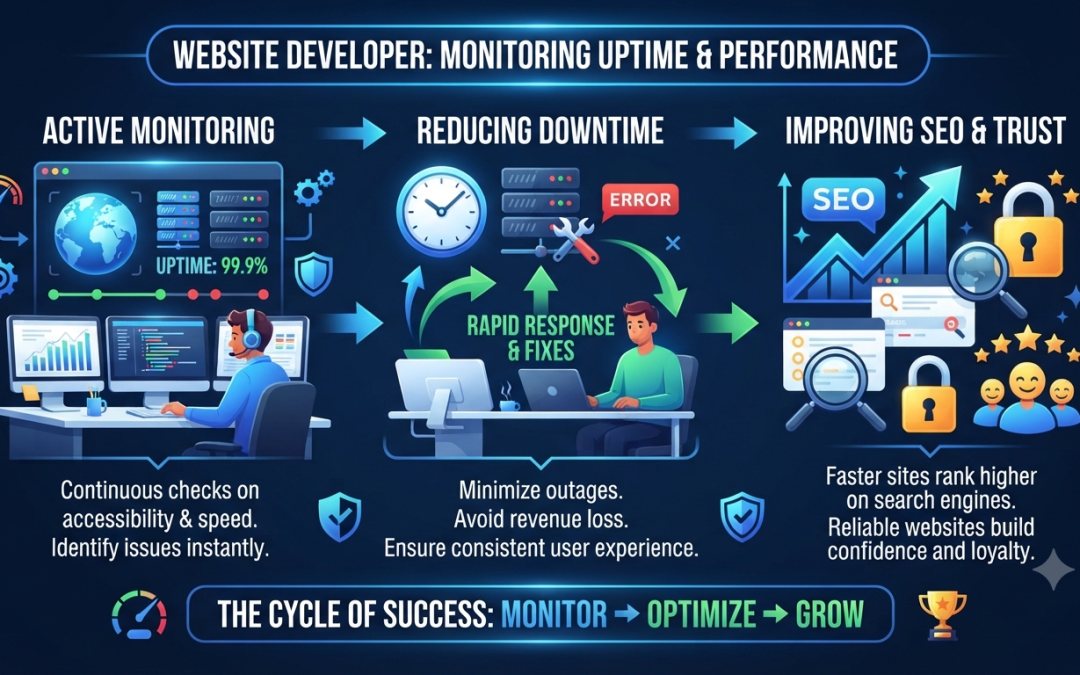
A business website is expected to be available whenever potential customers need information, products, or services. Whether someone visits during business hours, late at night, or on the weekend, they expect the website to load quickly and function properly. When a website becomes unavailable, even for a short period, it can negatively affect user experience, search engine visibility, and business credibility.
Website downtime occurs when a website cannot be accessed because of server issues, software problems, cyberattacks, maintenance errors, or hosting failures. While occasional downtime may seem harmless, repeated or prolonged outages can have lasting consequences for both SEO performance and customer trust.
Understanding how website downtime affects your business can help you take proactive steps to improve website reliability and maintain a strong online presence.
What Is Website Downtime?
Website downtime refers to any period when a website is unavailable or inaccessible to visitors.
During downtime, users may encounter messages such as:
- Server unavailable
- Connection timed out
- 500 Internal Server Error
- Website not found
- Service unavailable
Whether the issue lasts for a few minutes or several hours, visitors are unable to access the website or complete important actions such as submitting enquiries or making purchases.
Common Causes of Website Downtime
Several factors can cause a website to become unavailable.
Some of the most common causes include:
- Server failures
- Poor-quality web hosting
- Software conflicts
- Plugin or theme errors
- Cybersecurity attacks
- Expired domain names
- Website maintenance mistakes
- Traffic spikes
Identifying the root cause quickly helps minimise downtime and restore normal website operation.
Website Downtime Can Affect SEO
Search engines aim to deliver reliable and accessible websites to users.
When search engine crawlers repeatedly encounter an unavailable website, they may struggle to crawl or index its pages efficiently.
Over time, repeated downtime can contribute to:
- Reduced crawl efficiency
- Delayed indexing
- Lower search visibility
- Missed ranking opportunities
Although occasional short outages may have little impact, frequent downtime can weaken your overall SEO performance.
Visitors May Lose Trust
First impressions matter online.
When visitors encounter an unavailable website, they may assume the business is unreliable or no longer operating.
As a result, potential customers may:
- Leave the website immediately
- Visit a competitor
- Delay making enquiries
- Lose confidence in the business
Maintaining a reliable website helps build trust and encourages visitors to return.
Lost Business Opportunities
Website downtime can directly affect business performance.
If customers cannot access your website, they cannot:
- Submit contact forms
- Request quotations
- Purchase products
- Book appointments
- Read service information
Every period of downtime represents a potential loss of enquiries, sales, and customer engagement.
Impacts Brand Reputation
A professional website reflects the quality of a business.
Frequent website outages may create the impression that the company does not properly maintain its online presence.
Reliable website availability demonstrates professionalism, improves user confidence, and strengthens brand credibility.
Poor User Experience
User experience plays an important role in customer satisfaction.
Visitors expect websites to load consistently and remain available whenever they need them.
Repeated downtime can lead to:
- Visitor frustration
- Higher bounce rates
- Lower engagement
- Reduced return visits
Providing a stable website helps create a better overall experience for users.
Reliable Hosting Makes a Difference
Choosing a reliable web hosting provider is one of the most effective ways to reduce downtime.
Quality hosting services typically provide:
- Stable servers
- Better performance
- Regular monitoring
- Security protection
- Backup systems
- Higher uptime
Reliable hosting supports better website availability while improving long-term website performance.
The Importance of Website Monitoring
Website monitoring tools help identify problems as soon as they occur.
Continuous monitoring allows website owners to detect:
- Server outages
- Slow response times
- Security issues
- Performance problems
Early detection allows technical teams to resolve issues before they significantly affect visitors or search performance.
Why Regular Website Maintenance Matters
Website downtime can often be prevented through regular maintenance.
Routine website maintenance helps identify technical issues before they affect website availability or user experience.
Professional website maintenance may include:
- Software updates
- Plugin updates
- Theme updates
- Security monitoring
- Performance optimisation
- Error checking
- Broken link monitoring
Keeping every component updated helps reduce technical issues while improving overall website stability.
Website Backups Improve Recovery
Even well-maintained websites can occasionally experience unexpected problems.
Regular website backups allow businesses to restore their websites quickly if data is lost because of:
- Server failures
- Cybersecurity incidents
- Software conflicts
- Human errors
- Website corruption
A reliable backup strategy helps minimise downtime and allows business operations to resume more quickly.
Professional Website Support Reduces Downtime
Managing a business website requires ongoing technical expertise.
Professional website support teams continuously monitor website performance, resolve technical issues, and apply updates that help keep websites running smoothly.
Professional website support services often include:
- Website monitoring
- Technical troubleshooting
- Security updates
- Performance improvements
- Backup management
- Preventive maintenance
Having experienced professionals manage your website reduces the likelihood of prolonged outages and improves long-term reliability.
Long-Term Benefits of Minimising Website Downtime
Reducing website downtime provides lasting benefits for businesses of all sizes.
These include:
✔ Improved SEO performance
✔ Better customer trust
✔ Higher website availability
✔ Increased enquiry opportunities
✔ Better user experience
✔ Stronger brand reputation
✔ Improved business continuity
✔ Greater long-term online growth
A reliable website creates a better experience for both search engines and potential customers.
Conclusion
Website downtime is more than just a temporary inconvenience. It can affect search engine visibility, reduce customer confidence, interrupt business operations, and lead to missed opportunities.
By investing in reliable hosting, regular website maintenance, website monitoring, and professional technical support, businesses can significantly reduce downtime and maintain a dependable online presence.
Keeping your website available and performing consistently helps strengthen customer trust, improve SEO performance, and support sustainable business growth.
FAQs
1. What is website downtime?
Website downtime is any period when a website becomes unavailable or cannot be accessed by visitors due to server issues, technical errors, maintenance problems, or other system failures.
2. Can website downtime affect SEO?
Yes. Frequent or prolonged downtime can prevent search engines from crawling and indexing your website efficiently, which may negatively affect search visibility and overall SEO performance.
3. What causes website downtime?
Common causes include server failures, poor-quality web hosting, software conflicts, plugin or theme errors, cybersecurity attacks, expired domains, and unexpected technical issues.
4. How can businesses reduce website downtime?
Businesses can reduce downtime by using reliable web hosting, performing regular website maintenance, monitoring website performance, updating software, and maintaining secure website backups.
5. Why is website monitoring important?
Website monitoring detects problems such as server outages, slow response times, and technical issues as soon as they occur, allowing them to be resolved quickly before they affect customers or search engine performance.